European Energy Shortages Could Be Felt By April

Energy shortages could hit Europe by next month, Shell CEO Wael Sawan said on Tuesday, adding that securing adequate energy supply was critical to national security.Countries cannot have national security without energy security, Sawan said, adding that Shell was trying to work with governments to help them address the energy crisis, including with storage and purchasing. The Middle East conflict, now in its fourth week, has already affected supplies of jet fuel, with diesel set to be next, followed by gasoline as summer driving season gets underway in the Northern Hemisphere…
Danish funds challenge Nordea at AGM over Arctic Oil
Two Danish institutional investors have backed a shareholder resolution calling on the Nordic region's largest bank,?Nordea, to cease all financing of companies that are expanding Arctic oil and gas production due to environmental risks. Investors, pension funds Sampension and Akademiker, informed the annual general meeting of the bank on Tuesday about their voting intentions. The activist motion comes in the wake of the oil crisis caused by the Iran war and after the Norwegian Government announced last year plans to increase drilling in Norway's Arctic offshore region.
TotalEnergies production down 15% due US-Iran War; confirms UAE Outages
The French oil giant said that TotalEnergies has lost 15% of its 'oil and 'gas production as the U.S. Israel war against Iran closes down fields in the Middle East including the UAE, Qatar, and Iraq. Total said that this output represents about 10% of its?upstream cash flows. This was the first official confirmation of widespread production outages in the UAE caused by the crisis. Qatar and Iraq had announced earlier production cuts. The UAE, however, has not released any official information. Total has announced that its offshore production in the UAE has been shut down. Around half of the UAE's oil production comes from offshore fields.
US-Israeli War on Iran Causes Major Oil, Gas Disruptions
Kuwait announced?cuts at the weekend due to the U.S. and Israel war against Iran. Analysts predict the United Arab Emirates (UAE) and Saudi Arabia, which are running out of oil storage, will have to reduce their output as well. Here are the main energy disruptions that have occurred so far. Three industry sources reported on March 8 that the Iraqi production has collapsed: "the country's oil output from its southern oilfields is down 70%, to 1.3 million barrels a day (bpd), from 4.3 millions barrels a day (bpd), before the war. Exports through the Strait of Hormuz are still closed." In addition…
Sources say that oilfield production in Iraqi Kurdistan has been halted after a drone strike.
Security sources and an oilfield engineer confirmed that a drone strike struck an 'oilfield operated by U.S. company HKN Energy? in Iraq's Kurdistan Region on Thursday. The attack caused a fire? and halted?production?, they said. The Sarsang oil field is operated by HKN Energy with a 62% stake. HKN, a privately owned U.S. oil & gas?company, is owned by Hillwood Energy. Hillwood Energy is part of the Hillwood group founded by Ross Perot Jr. Kurdish officials, however, accused the?Iraqi?militias allied with Iran? of carrying out the attack. If this is the case…
Ecopetrol's quarterly profit drops by 61%
Ecopetrol, Colombia's state-owned oil company, reported on Wednesday a 60.8% decline in profits for the fourth quarter compared to a year earlier. This was due to lower Brent crude oil prices, lower gas sales at home, and a weaker currency. The company reported in a filing with Colombia's stock exchange that the net profit for the third quarter was 1.53 trillion Colombian Pesos ($403 millions) on total sales which fell 17.2%, to?28.82 billion pesos. Ecopetrol's shares, which are owned by the Colombian Government to an 88.5%, saw its total oil and gas production drop by 0.1% compared to the same quarter in?2024, down at 729,200 barrels equivalent per day (boed).
Oil companies reject Trump Administration's Alaska Offshore Auction
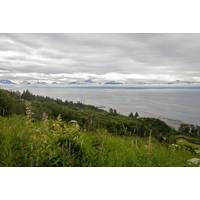
The Trump administration sold more than 400,000 acres (406,876 hectares) of land in Alaska's Cook Inlet on Wednesday, but no oil and gas drillers showed up. They refused to make a bid.The One Big Beautiful Bill Act of U.S. president Donald Trump, which was signed into law in 2017, mandates six Alaska offshore gas and oil auctions through 2032.Trump has sought ways to increase domestic oil and gas production, including in Alaska, where the industry has seen a decline in recent decades. Drilling in Alaska and the Arctic is a high risk endeavor that involves decades of effort and billions of dollars.The U.S.
US-Israeli War on Iran Causes Major Oil, Gas Disruptions
The U.S. and Israel war against?Iran disrupted oil exports to the Middle East, forcing production stops from Qatar to Iraq. Here are the major energy disruptions that have occurred so far. Iraq's OPEC's second largest producer, Iraq, slashes production: Iraq?has reduced almost 1.5 million barrels a day?due...to storage limitations and the lack.of an export route. Officials told. The country could be forced to close 3 million barrels per day within days if the exports don't resume. According to a survey conducted in January, the total Iraqi production accounted for 4.1 million barrels per day, or 4% of global output.
US-Israeli War on Iran Causes Major Oil, Gas Disruptions
The 'U.S. and Israel war against Iran' has caused oil and gas exports to the Middle East to be disrupted and production stops from Qatar and Iraq. Here are some of the major energy disruptions that have occurred. Iraq, OPEC’s second largest?producer has reduced its output. Iraq has cut almost?1.5 mln barrels per day – about half of it – due to storage limitations and the absence of an export route. The country could be forced to close 3 million barrels per day, or nearly all its production, if exports don't resume. QatarEnergy has halted its LNG operations. Qatar ceased operations at some of its largest LNG plants on Monday.
US-Israeli War on Iran Causes Major Oil, Gas Disruptions
The U.S. and Israel war against Iran has 'disrupted oil and gas exports out of the Middle East and forced production stops from Qatar to Iraq. Here are the main energy disruptions that have occurred so far. Iraq, the second largest producer in OPEC, has slashed its?output. Iraq has reduced nearly 1.5 million barrels a day - or about half - because of storage limitations and the absence of an export route. The country could be forced to close 3 million barrels per day, or nearly all its production, if exports don't resume. QatarEnergy LNG has been halted. Qatar stopped its LNG operations on Monday.
Analysts say that the Iran war could threaten Exxon TotalEnergies' production
Analysts said that Exxon Mobil and TotalEnergies are the three companies most exposed to disruptions of oil and gas production due to the U.S./Israel war against Iran. Energy sector has been shook by the U.S.-Israeli'strikes' on Iran on Saturday that killed Iran's Supreme Leader Ayatollah Khamenei. The conflict forced some oil and natural gas fields to close in the area and has effectively stopped shipping through the Strait of Hormuz. This is an important waterway that connects Iran and Oman, through which tankers transporting crude oil, fuel, and liquefied gas are transported on their way from Middle Eastern producers and refiners.
Wall Street closes with a narrowly mixed result, but trading is volatile following air strikes on Iran
U.S. stock prices ended Monday close to flat after a volatile session that saw shares fall early following the weekend's?U.S. Israeli air strikes against?Iran.?But there were bounces all day long as investors bought dips. The coordinated U.S.-Israeli strikes against Iran last weekend resulted in the death of Tehran's Supreme leader, and shocked global markets. Oil prices rose and many overseas stock indexes ended lower. Investors in the United States who were looking for bargains bought at the dips following the initial sell-off. They did so because they believed that disruptions caused by the conflict would be limited.
DNO and Dana Gas stop Kurdistan production after U.S. - Israel strikes on Iran

Oslo-listed DNO, and Dubai-listed DNA Gas, halted oil and gas production in their respective fields, located in Kurdistan, Iraq, out of caution, following the United States' and Israel's strikes against Iran. In the last year, both the Tawke gas?field and Khorm Mor oilfield production facilities were attacked. An Iraqi government source told reporters at the time, however, that pro-Iranian militants were suspected. He said that his?company has been preparing for "a possible overhead military operation in the area" over the past couple of weeks. DNO and Genel Energy, located near the Turkish border in Tawke?and Peshkabir, produced more than 77,000 barrels per day (bpd).
Iran's main oil, gas and infrastructure production

On Saturday, Israel and the United States launched an offensive against Iran. The attack could cause oil and gas production to be disrupted and damage the energy infrastructure in the Middle East. Iran is the third-largest oil producer in the Organization of Petroleum Exporting Countries (OPEC). It pumps 4.5% or so of world oil. Iran produces 3.3 million barrels of crude oil per day, plus another 1.3 million barrels of condensate. According to FGE, Iran's domestic refining capacity is 2.6 million barrels per day. According to Kpler's estimates, in 2025 it will export nearly 820,000 bpd, including LPG. This is slightly lower than the levels of 2024.
Venezuela suspends 19 oil, gas production-sharing contracts signed under Maduro, sources say
Four sources familiar with the matter said that Venezuela's oil ministry suspended 19 contracts signed with private companies under the?administration? of President Nicolas Maduro. Sources say that the suspension of the contracts has not affected the oil and gas production in the country. The sources added that the state oil giant PDVSA sells the crude produced by the contracts even though they are suspended. Sources said that Washington and Caracas would review contracts and could recommend "revocating" some of them. Sources say that the Venezuelan and U.S. governments are reviewing credentials of companies who signed the contracts.
Venezuela suspends 19 oil, gas production-sharing contracts signed under Maduro government, sources say
Four sources with knowledge of the?move? said that Venezuela's Oil Ministry has suspended a total of?19 oil-production-sharing contracts signed by?private companies under President Nicolas Maduro. Sources say that the suspension of the contracts has not affected the oil and gas production in the country. The sources added that the state oil giant PDVSA continues to sell crude oil produced under these contracts even though they are suspended. Sources said that Caracas and Washington would review contracts and could recommend revoking certain of them. Sources say that the Venezuelan and U.S. government are reviewing the credentials for the companies who signed the contracts.
Angola’s national oil company is looking to diversify its business into minerals that are critical.
Sonangol, the state-owned Angolan oil company, said Wednesday it wants to diversify its business into minerals that are critical for economic growth. Sonangol's executives told a press conference that the company made a net profit of over $750 million by 2025. This is compared to 736 billion kwanzas (about $807 million) in 2024. Conglomerate owns stakes in offshore oil and gas blocks, operates a fleet and refineries. Sebastiao Gaspar Martins, the Chief Executive of Sebastiao Gaspar, said that it also had seven concessions for uranium exploration, lithium exploration, and quartz exploration.
Low oil and gas prices affect TotalEnergies' profits, so the company has cut back on buybacks but maintained its growth plans.
TotalEnergies said on Wednesday that it would halve its share buybacks in the first quarter, but was committed to increasing its oil and gas reserve. Low oil and 'gas prices have negated the soaring profit of the fourth-quarter from refining fuels and proceeds from stake sales for renewable assets. The French oil giant's adjusted fourth-quarter net income dropped to $3.8 billion from $4.4 billion one year ago. According to a LSEG consensus, analysts had predicted $3.9 billion. The adjusted net income for the entire year fell 15% to $15.6 Billion, despite an increase of 4% in hydrocarbon production per day to 2,53 million barrels.
Darwin LNG begins shipments on the Kool Blizzard with its first cargo

Ship-tracking data revealed that the Darwin liquefied gas plant (DLNG), operated by Australian oil producer?Santos since restarting operations, had exported its first shipment. The shipment is currently heading to Sakai in Japan. Darwin LNG stopped shipments at the end of 2023, as its previous gas supply, the Bayu Undan Field in the Timor Sea was running out. The Barossa project, owned by Santos and SK E&S and JERA, is now supplying the plant with natural gas. The Kool Blizzard, a tanker that left the Darwin LNG facility in Australia's Northern Territory (Australia) on January 25th, picked up the first cargo after the restart.
Shell Nigeria announces progress on $20 billion Bonga South West Oilfield
Bola Tinubu, Nigeria's President, has approved "investment linked" incentives for Shell’s Bonga South West Deepwater Oilfield. This follows a meeting between the CEO of the company Wael Sawan and the Nigerian president. Wael Sawan indicated that the project could be greenlit in 2027. The incentives proposed are part of a series of regulatory reforms that have been implemented in Africa's largest crude oil producer in order to attract investments to boost oil and gas production. His office did not provide any further details on the incentive program. His office has not provided any further information on the incentives.