Azerbaijan’s state oil fund SOFAZ reduces gold share of portfolio to 35.6% during Q1
Azerbaijan’s sovereign oil fund SOFAZ has 'cut the share of gold in its investment portfolio from 38.2% to 35.6% in the first quarter of 2026, down from 38.2% by the end of the year 2025. SOFAZ has sold 21.9 tonnes gold in the first quarter. This brings its total gold reserves down to 178.1 tonnes, from 200 tonnes. This was still a significant increase from the gold holdings of the fund at the end Q1 of last year, when they accounted for?165.3 tons, or 25.8%, of the portfolio. The report shows that the fund's assets dropped to $73.516 Billion in the first quarter of 2026, from $73.541 Billion at the end 2025.
Iran War causes major disruptions in oil and gas
U.S. and Israeli war against Iran, and Tehran's attacks upon Gulf neighbours has caused oil and gas?exports to be disrupted and production stopped. Sources say that Saudi Aramco, the world's largest oil producer, cut its output Monday. The Strait of Hormuz is the most important oil artery in the world, and it handles 20% of the global oil supply. Two sources reported on Monday that Aramco had begun reducing production at two of its fields. Saudi Arabia is the top oil exporter in the world. In February, it produced roughly 10.3 million barrels of crude oil per day.
US-Israeli War on Iran Causes Major Oil, Gas Disruptions
The U.S. and Israeli war against Iran has caused oil and gas exports to be disrupted from the Middle East. Production was stopped from Qatar all the way up to Iraq. Kuwait announced cuts this weekend. Analysts predict the United Arab Emirates (UAE) and Saudi Arabia, too, will have to reduce their output as soon as possible when they run out of oil storage. Kuwait Force Majeure: Kuwait Petroleum Corporation cut oil output and declared force majeure March 7, due to the war that shut down exports through the Strait of Hormuz.
US-Israeli War on Iran Causes Major Oil, Gas Disruptions
The 'U.S. and Israel war against Iran' has caused oil and gas exports to the Middle East to be disrupted and production stops from Qatar and Iraq. Here are some of the major energy disruptions that have occurred. Iraq, OPEC’s second largest?producer has reduced its output. Iraq has cut almost?1.5 mln barrels per day – about half of it – due to storage limitations and the absence of an export route. The country could be forced to close 3 million barrels per day, or nearly all its production, if exports don't resume. QatarEnergy has halted its LNG operations.
CEE ECONOMY - Czech inflation slows down in February, but not likely to cause central bank to cut rates
The preliminary data released on Wednesday showed that 'Czech inflation fell further below the central banks target in February. Its headline rate dropped to a lower than nine-month-low of 1.4% on the back of a slower food price increase and lower energy prices. The data comes after the Czech National Bank discussed a renewed policy of easing during its last meeting, on February 5. Conflict in the Middle East as a result of U.S.-Israeli strikes on Iran over the weekend has widened and upset?markets. Soaring oil and gasoline prices are fueling global inflation fears.
US-Israeli War on Iran Causes Major Oil, Gas Disruptions
The U.S. and Israel war against Iran has 'disrupted oil and gas exports out of the Middle East and forced production stops from Qatar to Iraq. Here are the main energy disruptions that have occurred so far. Iraq, the second largest producer in OPEC, has slashed its?output. Iraq has reduced nearly 1.5 million barrels a day - or about half - because of storage limitations and the absence of an export route. The country could be forced to close 3 million barrels per day, or nearly all its production, if exports don't resume. QatarEnergy LNG has been halted. Qatar stopped its LNG operations on Monday.
US-Israeli War on Iran Causes Major Oil, Gas Disruptions
The U.S. and Israel war against Iran has caused oil and gas exports to be disrupted from the Middle East, and production from Qatar?to Iraq was forced to stop. Here are the major energy disruptions that have occurred so far. Iraq, OPEC’s?second largest producer, has reduced?output by almost a third due to storage limitations and the absence of export routes, officials said. The country could be forced to close 3 million barrels per day, or nearly all its production, within days, if exports don't resume. QatarEnergy LNG halted operations: Qatar ceased operations at its LNG plants on Monday.
Russia downgrades gas exports, production outlook

Russia's forecasts for 2025 gas and oil exports have been lowered, while projections on oil exports have increased. The fallout of its conflict with Ukraine as well as its strained relations with the West continue to impact the energy sector. While Russia's economy is still thriving despite the sanctions, signs of stress are appearing in several industries. Gazprom, the state-owned gas exporter, suffered losses of nearly $7 billion in 2023. This was its first loss since 1999 due to a breakup with the European Union. Russian gas is now only 18% of European imports. This is down from 45% by 2021.
Trump urges NATO nations not to buy Russian oil
Nations stop purchasing Russian oil and take similar measures. Trump wrote on social media that he was ready to impose major sanctions against Russia once all NATO countries agreed to the same and stopped buying Russian oil. The United States has increased pressure on NATO nations to tighten energy restrictions on Russia to help end the war in Ukraine. Trump has faced criticism in the United States for setting deadlines of two weeks for Russia to deescalate, and then letting them pass without any concrete action.
US Energy Secretary downplays climate risk as Washington seeks EU Gas Deals
Chris Wright, the U.S. Energy secretary, downplayed climate change risks on Thursday as he promoted Washington’s return to a “commonsense policy” while the Trump Administration worked to increase oil and gas exports to Europe and other allied countries. Wright spoke with reporters in Brussels after he met the European Union energy commissioner Dan Jorgensen. U.S. Doug Burgum, the Interior Secretary of the United States, was also in Europe last week to sign energy deals. Washington is hoping that these agreements will increase its influence in Europe while reducing Russia's.
Afipsky Oil Refinery Fire Extinguished After Drone Attack

A fire at the Afipsky oil refinery in Russia's Krasnodar region, caused by fallen drone debris, was extinguished, local emergency services said on Thursday.The Russian Defence Ministry said air defence systems had shot down nine Ukrainian drones over the region overnight.The Ukrainian military confirmed that its drone units had hit the refinery in Krasnodar region, without providing details.It was not immediately clear what the extent of the damage was at the Afipsky refinery, which together…
Energy assets affected due to sanctions and standoff between Russia and the West

On Tuesday, the United States and Russia reached separate agreements to stop attacks on energy and maritime targets. Washington also agreed to press for the lifting of some sanctions against Moscow. In the event that a peace agreement is reached between Russia and Ukraine, the potential for a relaxation of U.S. sanctions and EU sanctions has led to the question of what will happen to the disputed assets which were affected by international sanctions. This includes both Russian assets located in Europe as well as assets owned by foreign companies in Russia.
Canada mentions potash and oil as a possible lever to use in the tariff dispute

Melanie Joly, Canada's Foreign Minister, told Toronto businesspeople on Wednesday that Canada may use its oil and gas exports to negotiate if U.S. import tariffs increase. Canada has announced that it will impose tariffs worth C$155 billion on U.S. imports, but so far has not indicated whether or not it would reduce the exports of important commodities to the United States. Canada exports approximately 90% of all its crude oil exports to the United States. "Of Course, there is oil and gas." "We haven't laid that out yet, guys.
Handelsblatt reports that Scholz, Germany's Scholz, welcomes the U.S. energy policy turnaround
The German newspaper Handelsblatt reported that German chancellor Olaf Scholz welcomed U.S. president Donald Trump's plans to increase oil and gas exports. He said it was good for Europe and Germany. Scholz stated in an interview that the move will help with the transition towards climate neutrality. This phase would last until the middle of this century. The chancellor stated that "more supply on the market will mean lower energy prices". Scholz praised Trump's desire to build new terminals of liquefied gas (LNG), which his predecessor Joe Biden had not done.
Drill, baby, drill in Argentina's Vaca Muerta shale lands!
Argentina's new, market-friendly government, and concerns about oil supplies from the Middle East, and elsewhere, are driving a boom in drilling and production in the Patagonian South, which is home to the giant Vaca Muerta shale, Spanish for "Dead Cow". In the flat, arid terrain, the production of shale oil and gas is surging. Fracking wells have been drilled in record numbers, and pipelines have been built to transport gas to the capital Buenos Aires – and beyond once LNG plants are operational.
Wasted Gas: As Global Supplies Tighten, Here’s 210 bcm of Natural Gas for the Taking – IEA Report
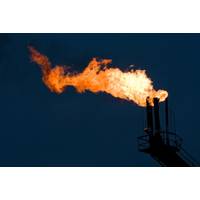
A new report from the International Energy Agency (IEA) estimates that if there was a concerted, global effort to eliminate unnecessary flaring and control leaks across the supply chain, nearly 210 billion cubic meters (bcm) of natural gas could be made available to gas markets.Russia’s war with Ukraine has sent energy prices soaring as a broad swath of sanctions has effectively re-routed Russian oil and gas exports. The recent report from IEA – “The energy security case for tackling gas flaring…
US Energy Exports Severely Disrupted by Hurricane Laura
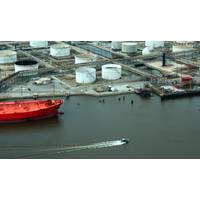
Oil and gas exports from the United States have been severely disrupted by Hurricane Laura, with nearly a million barrels per day (bpd) of crude exports likely reduced this week by closures of U.S. Gulf Coast terminals and disruptions at ports.The hurricane also temporarily suspended operations at several liquefied natural gas (LNG) facilities in the world’s third largest exporter of the super-cooled gas, with shipments on track to fall to their lowest in 18 months.Laura made landfall early Thursday near the Texas-Louisiana border…
US Nearing Energy Independence
In just a few months, the U.S. will be fully energy independent and by 2030, the country's total primary energy production will outpace primary energy demand by 30 percent.According to the Norwegian market research consultancy Rystad Energy, this milestone follows a strong period of growth in both hydrocarbon and renewable resources."We forecast that the US will have primary energy surplus – and not a deficit – by February or March 2020, depending on the intensity of the winter season,” says Sindre Knutsson…
Equatorial Guinea to Offer Ophir's Old Blocks
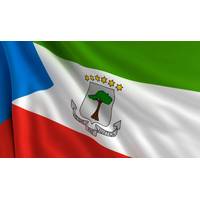
Equatorial Guinea will offer offshore Block R with the related Fortuna gas development project in the April licensing round, after the concession was reclaimed from Ophir Energy Plc, the oil minister said on Tuesday.Gabriel Obiang Lima told Reuters in Cape Town that Block R would be one of up to 13 deepwater and ultra deepwater blocks offered in the licensing round on April 1.Ophir was denied an extension in December to its licence for Block R and its plan for a floating liquiefied natural gas (LNG) project.
EU Aims to Block U.S. Sanctions on Iran
The European Union vowed on Monday to counter U.S. President Donald Trump's renewal of sanctions on Iran, in a test of the EU's ability to preserve a deal that saw Iran limit its nuclear ambitions in exchange for removing strict curbs on its economy.As Washington's so-called "snapback" sanctions are reinstated on Tuesday, a new EU law to shield European companies will also take effect to try to mitigate what EU officials say is their "unlawful" reach beyond U.S. borders.Despite protests from European allies, U.S. Secretary of State Mike Pompeo said Washington would fully enforce the sanctions.